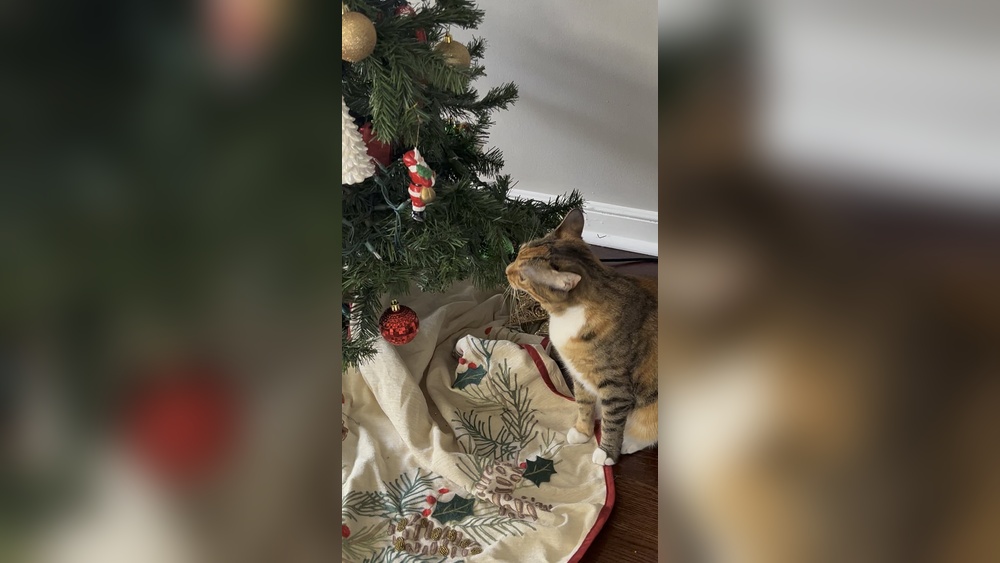
Are you worried every time your cat approaches your beautiful artificial Christmas tree? You’re not alone.
Cats love to bite, claw, and play with tree branches, turning your festive decoration into a mess. But don’t let this spoil your holiday spirit. You’ll discover simple and effective ways to stop your cat from biting your artificial Christmas tree.
Keep reading to protect your tree and keep your furry friend happy and safe this season.
Why Cats Bite Christmas Trees
Cats biting artificial Christmas trees is a common problem during the holiday season. Understanding why cats do this helps in managing their behavior better. Cats do not bite trees to be naughty. Their actions come from natural reasons tied to their instincts and needs. Knowing these reasons can guide you on how to keep your tree safe.
Natural Instincts And Play Behavior
Cats have strong hunting instincts. Biting and clawing mimic catching prey. The tree branches move and dangle like prey. This attracts cats to play and bite. The texture of the tree also feels interesting to their paws and mouth. For cats, the tree is a new toy to explore.
Curiosity And Exploration
Cats are curious animals. New objects in their home catch their attention. The Christmas tree is tall, shiny, and smells different. Cats use their teeth and paws to learn about new things. Biting the tree helps them understand it better. Curiosity drives cats to test the tree’s texture and strength.
Teething And Dental Needs
Kittens and young cats bite to relieve teething pain. Chewing helps soothe sore gums. Adult cats also bite objects to clean their teeth. The artificial tree provides a firm surface for chewing. Biting the tree meets their need to keep teeth healthy. This behavior is natural and common in cats.
Risks Of Biting Artificial Trees
Biting an artificial Christmas tree might seem harmless to some pet owners. Cats often chew on the tree out of curiosity or boredom. This behavior can cause several risks for both the cat and the home. Understanding these risks helps prevent problems before they start.
Health Hazards For Cats
Artificial trees contain small plastic parts and wires. Chewing these can cause choking or blockages in a cat’s stomach. Some trees have toxic materials that might harm your cat’s health. Mouth cuts and stomach upset are common issues from biting. Keep cats away to avoid vet visits and pain.
Damage To The Tree
Biting weakens the tree’s branches and leaves. Cats can pull off pieces, making the tree look damaged. The tree might become unstable and fall over easily. Repairing or replacing a broken tree costs money and time. Protect your tree to keep it looking fresh all season.
Safety Concerns In The Home
Broken pieces from the tree can cause accidents. Sharp wires or small parts may harm people or pets. A falling tree can knock over decorations or break fragile items. Electrical wires in the tree can pose fire risks. Ensuring safety reduces the chance of accidents in your home.
Preventive Measures For Cat Owners
Preventive measures help stop your cat from biting the artificial Christmas tree. Taking simple steps keeps your tree safe and your cat happy. These tips make the holiday stress-free for both you and your pet.
Choosing Safe Tree Materials
Pick a tree made of non-toxic materials. Avoid trees with sharp edges or small parts. Soft, flexible branches cause less harm to your cat’s mouth. A safe tree lowers the chance of injury or sickness.
Proper Tree Placement
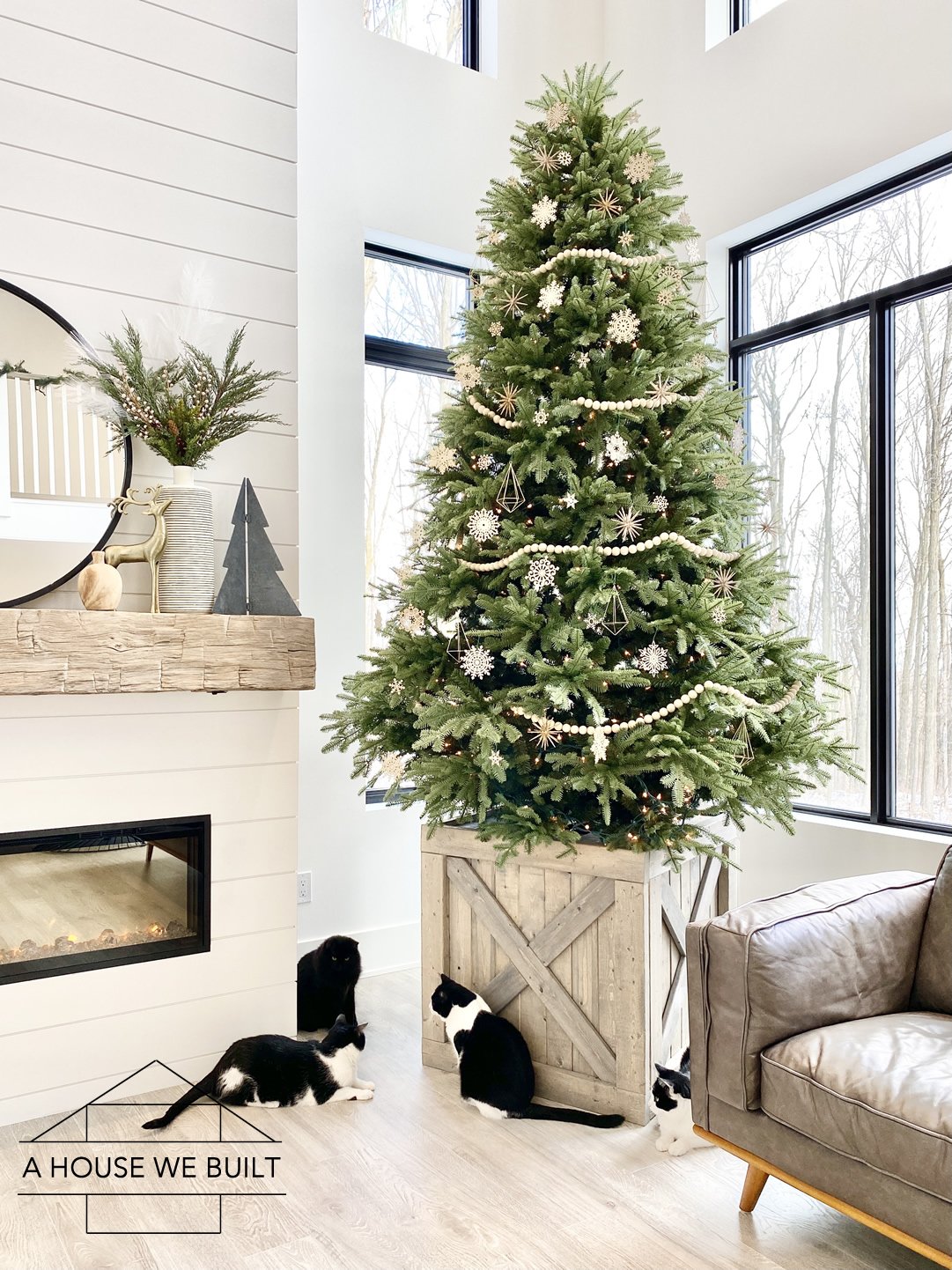
Place the tree away from your cat’s favorite spots. Avoid high-traffic areas where your cat plays or sleeps. A corner or room with a door helps limit access. This keeps your cat from getting too close to the tree.
Using Cat Deterrents
Use safe cat deterrents near the tree. Citrus scents and bitter sprays discourage biting. Scat mats or motion-activated alarms can also work. These tools teach your cat to stay away without harm.

Credit: vixencomposites.com
Behavioral Training Techniques
Training your cat to stop biting the artificial Christmas tree needs patience and clear steps. Behavioral training techniques help change your cat’s habits. These techniques focus on teaching your cat what is okay to bite and what is not. Using the right methods makes the training easier for both you and your cat.
Positive Reinforcement Methods
Reward good behavior with treats or praise. Cats learn fast when they get something nice after doing right. Give your cat a treat when it plays away from the tree. Use a soft voice to say “good” or “yes” at the same time. This helps your cat know biting the tree is not good but playing elsewhere is.
Redirecting Attention
Give your cat toys to chew on instead of the tree. Move your cat’s focus to something fun and safe. Use toys that look or feel like the tree’s branches. Play with your cat near the tree but guide it to the toy. This stops the biting and keeps your cat busy with a better option.
Consistency And Patience
Repeat the training every day without giving up. Cats need time to learn new rules. Always use the same commands and rewards. Avoid letting your cat bite the tree even once. Consistency helps your cat understand what you expect. Stay calm and patient during the process for best results.
Alternative Entertainment For Cats
Cats often bite or play roughly with artificial Christmas trees out of boredom. Providing alternative entertainment can help redirect their energy. This keeps your cat happy and protects your tree. Try new ways to engage your cat’s mind and body.
Interactive Toys And Games
Interactive toys catch a cat’s attention and keep them busy. Toys that move or make noise invite your cat to play. Puzzle feeders challenge their minds while giving treats. Laser pointers and feather wands encourage chasing and jumping. These toys satisfy hunting instincts in a safe way.
Creating A Cat-friendly Environment
Arrange spaces where cats can climb, scratch, and hide. Cat trees, shelves, and scratching posts offer fun and comfort. Place cozy beds near windows for bird watching. A variety of safe spots can reduce stress and boredom. This helps your cat stay calm and less likely to chew the tree.
Scheduled Playtime Benefits
Set regular times to play with your cat every day. Short, focused sessions burn energy and build trust. Play before meals to mimic natural hunting and eating patterns. Consistent playtime keeps cats active and less destructive. Routine helps your cat feel secure and reduces tree biting.
Credit: www.ahousewebuilt.com
When To Consult A Veterinarian
Knowing when to consult a veterinarian is important for your cat’s health and safety. Sometimes biting an artificial Christmas tree signals a deeper problem. It is better to act early to avoid serious issues. Watch your cat closely and learn the signs that show help is needed.
Signs Of Stress Or Anxiety
Stress and anxiety can cause cats to bite objects. Look for changes in behavior like hiding or loud meowing. Your cat might also scratch or bite more than usual. Restlessness and loss of appetite are common signs too. If these signs last more than a few days, see a vet.
Health Issues Related To Biting
Biting can be a sign of pain or discomfort. Teeth problems or mouth infections may cause your cat to chew hard objects. Digestive problems also make some cats bite strange things. A vet can check for these health issues. Early treatment helps your cat feel better quickly.
Professional Behavior Advice
Veterinarians can offer advice on managing biting behavior. They may suggest training tips or calming products. Sometimes, they recommend seeing a pet behaviorist. Professional guidance helps you keep your cat safe and happy around decorations. Don’t wait too long to get expert advice.
Credit: www.reddit.com
Frequently Asked Questions
How Can I Stop My Cat From Biting The Christmas Tree?
Provide distractions like toys and treats. Use deterrent sprays on the tree. Secure the tree firmly to prevent tipping.
Why Do Cats Bite Artificial Christmas Trees?
Cats bite trees out of curiosity, playfulness, or to relieve teething discomfort. The texture and shine attract them.
Are There Safe Sprays To Deter Cats From Trees?
Yes, citrus or bitter apple sprays safely discourage cats. These sprays have smells cats dislike but are harmless to them.
How To Protect Tree Ornaments From Cat Bites?
Place fragile ornaments higher on the tree. Use shatterproof decorations and avoid tinsel that entices cats to bite.
Conclusion
Stopping your cat from biting the artificial Christmas tree takes patience. Use safe sprays or distractions to keep your cat interested elsewhere. Provide toys or a scratching post to redirect energy. Watch your cat closely and gently discourage biting. Keep the tree stable and secure to avoid accidents.
Remember, consistent care helps both your cat and holiday decorations stay safe. Enjoy a peaceful and happy holiday season with your furry friend.