Have you ever wondered how those beautiful artificial Christmas trees in stores come to life? If you’ve ever admired their perfect shape and lush green branches, you might be curious about what goes into making them.
Understanding the process behind creating these trees can change the way you see your holiday centerpiece. You’ll discover each step involved in crafting an artificial Christmas tree, from the materials used to the careful assembly that makes them look so real.
Keep reading, and you’ll never look at your tree the same way again.

Credit: www.youtube.com
Materials Used
Artificial Christmas trees are made using specific materials to look real and last long. Each material plays a key role in the tree’s strength, color, and shape. Understanding these materials helps appreciate the craft behind these festive decorations.
Types Of Plastics
Plastic is the main material for tree leaves and needles. Polyvinyl chloride, or PVC, is the most common type. It is soft and easy to shape. Some trees use polyethylene, or PE, for a more natural look. These plastics hold color well and resist damage. They also make the tree lightweight and safe.
Metal Framework
The tree’s frame is made from metal, usually steel or aluminum. This frame holds the branches and gives the tree its shape. Metal is strong and keeps the tree steady. It also allows the tree to fold or come apart for easy storage. The metal parts are coated to stop rust and wear.
Coloring Agents
Coloring agents add the green and other colors to the plastic parts. Dyes and paints are used to create natural shades. These colors do not fade quickly. Some trees have tips sprayed white or silver to mimic snow. The colors make the tree look fresh and bright every year.
Design And Planning
The design and planning stage is the first step in making artificial Christmas trees. It shapes the tree’s look and feel. Designers think about what customers want. They plan the size, shape, and style carefully. This step ensures the tree looks natural and fits different spaces. Every choice affects how the tree will appear in homes and stores.
Shape And Size Selection
Choosing the shape and size is crucial. Trees come in many shapes: full, slim, or tall. Designers pick sizes to fit small rooms or big halls. The shape must look balanced and natural. Size choice helps customers find the right tree for their space.
Branch Arrangement
Branches must look full and spread evenly. Designers decide how many branches each tree will have. They plan branch angles to mimic real trees. Good branch arrangement helps hold decorations well. It also gives the tree a lifelike feel.
Needle Style Choices
Needles create the tree’s texture and color. Designers select from PVC or PE needles. Some needles are soft and flat, others are sharp and pointy. The style affects how the tree shines and feels. Needle choice helps make the tree look fresh and green.
Manufacturing The Branches
Manufacturing the branches is a key step in making artificial Christmas trees. The branches give the tree its shape and fullness. Each branch is made carefully to look like real pine needles. This process uses plastic materials to create durable and lifelike branches.
The making of branches involves cutting plastic sheets, forming needles, and attaching these needles to branches. Every step plays an important role in the final look of the tree.
Cutting Plastic Sheets
Plastic sheets are the base material for the needles. Machines cut these sheets into thin strips. The strips are the right size for making needles. Cutting must be precise to ensure uniform needles. This step prepares the plastic for shaping into needles.
Forming Needles
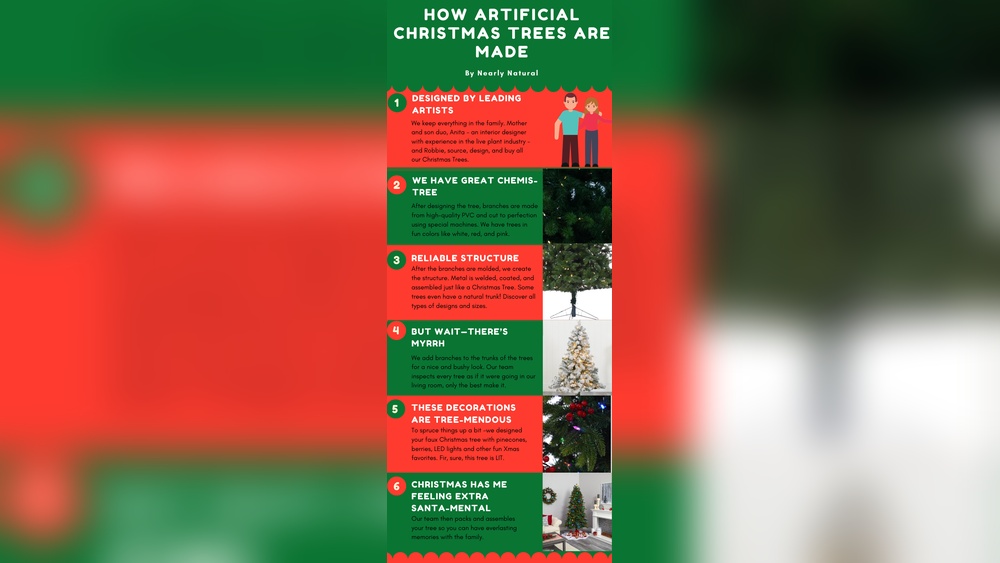
Thin strips are shaped into needles using heat and molds. The plastic softens and bends into needle-like shapes. The needles have sharp, pointed ends like real pine needles. Coloring is added to match natural green shades. This gives the tree a realistic look.
Attaching Needles To Branches
The finished needles are attached to metal or plastic branches. Machines insert needles evenly around the branch frame. This creates a full and thick branch appearance. The branches are flexible to allow shaping on the tree. Attaching needles carefully improves the tree’s overall quality.

Credit: www.webechristmas.com
Constructing The Frame
Constructing the frame is the first key step in making an artificial Christmas tree. The frame forms the tree’s shape and supports all the branches. It must be strong and well-designed to hold the decorations and last for many years.
Metal Rod Assembly
The frame starts with metal rods. These rods are cut to the right length. Then, workers bend them to create the tree’s cone shape. The rods connect at the center, forming a solid skeleton. This skeleton acts as the tree’s backbone.
Branch Attachment Points
Next, points for attaching branches are added to the frame. Small hooks or holes are placed along the rods. These points hold the branches securely. They also help space the branches evenly around the tree.
Frame Stability Testing
After assembly, the frame undergoes stability testing. Workers check if it stands straight and feels solid. They apply pressure to see if it bends or breaks. Only frames that pass this test move to the next step.
Assembly Process
The assembly process is a key step in making artificial Christmas trees. It transforms raw materials into a beautiful tree ready for decoration. This process requires careful work to ensure the tree looks full and natural.
Attaching Branches To Frame
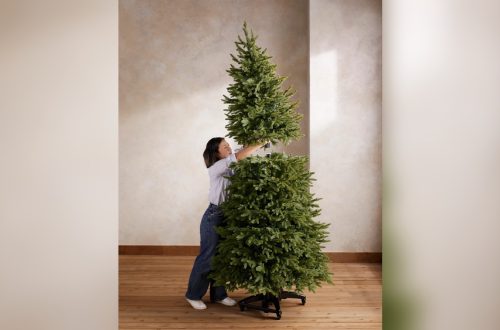
The first step is attaching branches to the metal frame. Workers insert each branch into pre-made holes. This step builds the tree’s shape and size. Branches are placed evenly around the frame for balance.
Shaping And Fluffing
After attachment, the branches are shaped and fluffed. Workers spread out each branch to fill gaps. This makes the tree look thick and lively. Fluffing also helps the tree hold its form during use.
Quality Inspection
Every tree undergoes a quality inspection before packaging. Inspectors check branch strength and overall shape. They remove damaged or weak branches. This step ensures the tree meets quality standards.
:strip_icc()/JF_How-to-Flock-a-Christmas-Tree-3107-Primary-330d2fb1e5c0404f8d508b0a49116315.jpg)
Credit: www.bhg.com
Packaging And Shipping
Packing and shipping are key steps in making artificial Christmas trees ready for stores. This process protects the trees during travel and ensures they arrive in perfect shape. Careful handling reduces damage and saves costs.
Factories follow strict methods to prepare trees for shipment. They focus on safe transport, clear packaging, and efficient delivery. Each step helps get the tree from the factory to the customer smoothly.
Disassembly For Transport
Artificial trees are often taken apart before shipping. This makes them easier to pack and moves them in smaller boxes. Branches and sections fit better inside the box this way. It also lowers shipping costs by reducing space.
Disassembly must be done carefully. Parts are arranged neatly to avoid bending or breaking. Workers use foam or plastic wrap to protect delicate pieces.
Boxing And Labeling
After disassembly, trees are placed in strong boxes. Boxes have padding to stop movement inside. This prevents scratches and damage during the trip.
Labels on boxes show important details. They include tree size, weight, and handling instructions. Clear labels help warehouse staff and delivery drivers handle the boxes correctly.
Distribution Channels
Packed trees move through several places before reaching stores. They may go to warehouses, wholesalers, or directly to retailers. Efficient routes help deliver trees on time for the holiday season.
Logistics teams track shipments to avoid delays. They coordinate trucks, ships, or planes depending on distance. Good distribution ensures customers get fresh, ready-to-assemble trees.
Frequently Asked Questions
How Are Artificial Christmas Trees Made?
Artificial Christmas trees are made by shaping PVC or PE materials into needles. These are attached to metal branches, then assembled on a central pole. The process involves cutting, molding, and assembling to mimic natural tree shapes and textures accurately.
What Materials Are Used For Artificial Christmas Trees?
PVC (polyvinyl chloride) and PE (polyethylene) are the main materials. PVC creates flexible, flat needles, while PE offers realistic, molded tips. Metal frameworks support the branches, ensuring durability and stability of the tree during display.
How Is The Tree’s Shape Designed And Formed?
Tree shapes are designed using molds and metal frames. Branches are cut to size and shaped by hand or machine. This creates a full, natural look. Each branch is attached to a central pole for easy assembly.
Why Are Artificial Trees Preferred Over Real Ones?
Artificial trees are reusable, cost-effective, and low-maintenance. They reduce waste and allergens compared to real trees. Their design allows for easy storage and customization, making them popular for long-term holiday decoration.
Conclusion
Making artificial Christmas trees involves careful steps and skilled work. First, manufacturers create metal frames for strong support. Then, plastic needles are shaped and attached to mimic real pine leaves. Colors and textures get added to make trees look natural.
Finally, trees are assembled and tested for quality. This process ensures durable, reusable trees for festive seasons. Understanding these steps helps appreciate the effort behind each tree. Now, you know how artificial Christmas trees come to life. Perfect for holiday joy year after year.