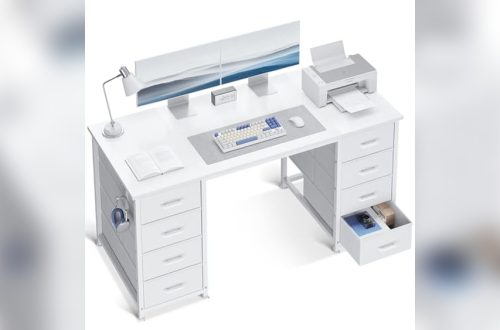
Is your home office desk drawer a cluttered mess that slows you down? You’re not alone—and the good news is, you can fix it.
Imagine opening your drawers and instantly finding exactly what you need without any frustration. Organizing your desk drawers isn’t just about tidiness; it’s about creating a workspace that boosts your focus and productivity. You’ll discover simple, practical steps to transform your drawers from chaotic to clean.
Ready to reclaim your desk and work smarter every day? Let’s dive in and get your home office drawer organization just right.
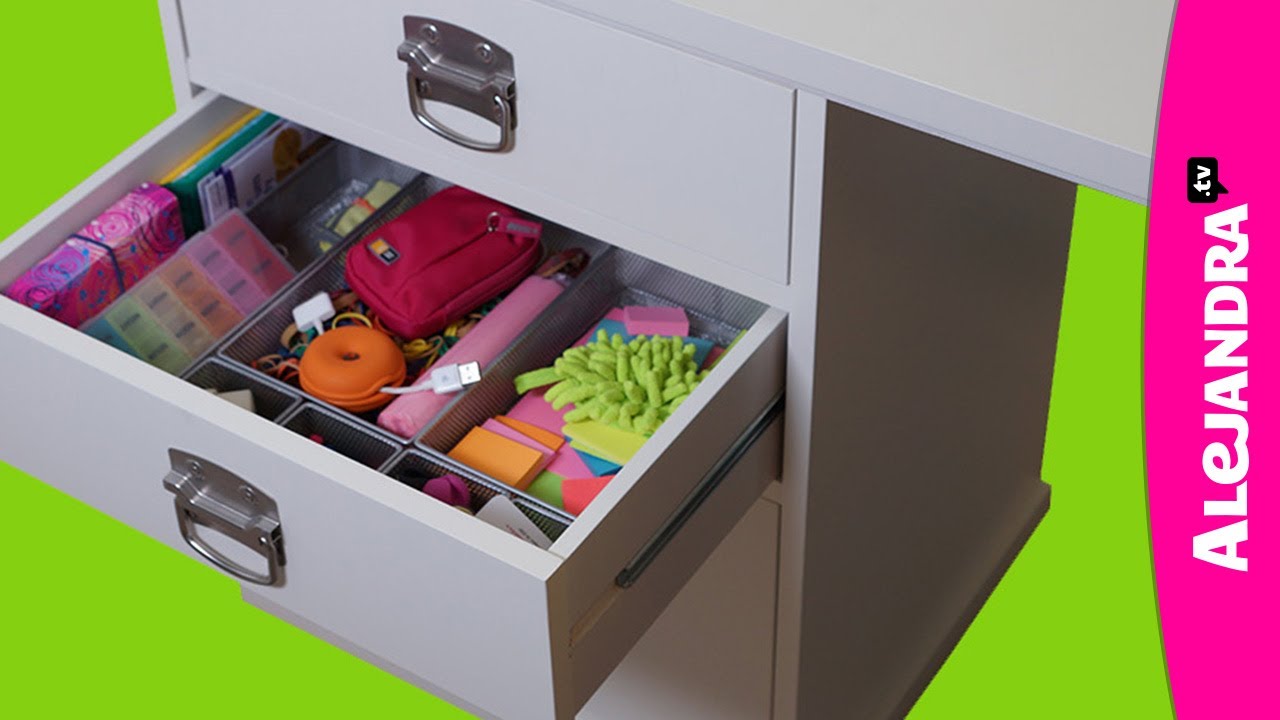
Credit: www.youtube.com
Clear Out All Drawers
Clearing out all your home office desk drawers is the first step to creating an organized workspace. This process helps remove clutter and gives you a fresh start. It also makes it easier to find what you need quickly. Follow these simple steps to clear out your drawers effectively.
Empty Every Drawer Completely
Take everything out of each drawer. Do not leave a single item inside. Lay the contents on a clean surface. This way, you can see everything you have. Emptying drawers fully helps spot hidden clutter. It also makes cleaning the drawer easier.
Sort Items By Usefulness
Group your items by how often you use them. Place daily essentials in one pile. Put rarely used items in another. This sorting helps decide what belongs in the desk. Keep only useful items close at hand. Others can be stored elsewhere or discarded.
Dispose Of Unnecessary Items
Throw away broken or old supplies. Recycle papers you no longer need. Donate items that are still good but unused. Clearing out junk frees up space for important things. This step prevents your drawers from filling up again quickly.
Categorize Office Supplies
Organizing your home office desk drawers starts with sorting your office supplies. Categorizing items helps you find what you need quickly. It also keeps your workspace tidy and efficient. Clear categories reduce clutter and save time.
Group By Function
Sort supplies by their purpose. Keep similar items together, like all writing tools in one place. Store paper clips, rubber bands, and sticky notes in another section. Grouping by function makes it easier to grab what you need fast. It also prevents mixing different supplies.
Separate Paper And Writing Tools
Keep paper items separate from pens and pencils. Place notebooks, notepads, and loose sheets in one drawer or compartment. Put pens, markers, and highlighters in another. This separation avoids mess and keeps your desk neat. It also protects paper from ink spills.
Organize Electronics And Accessories
Store chargers, USB drives, and headphones in one drawer. Use small containers or dividers to keep cords untangled. Keep batteries and small gadgets together. Organizing electronics separately stops damage and saves space. It also helps you find accessories quickly.
Use Drawer Dividers
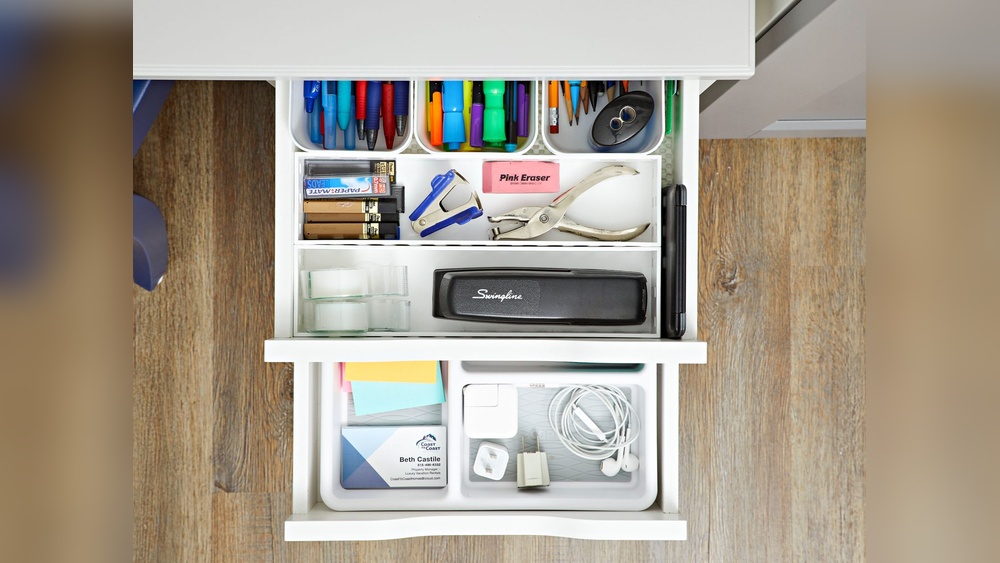
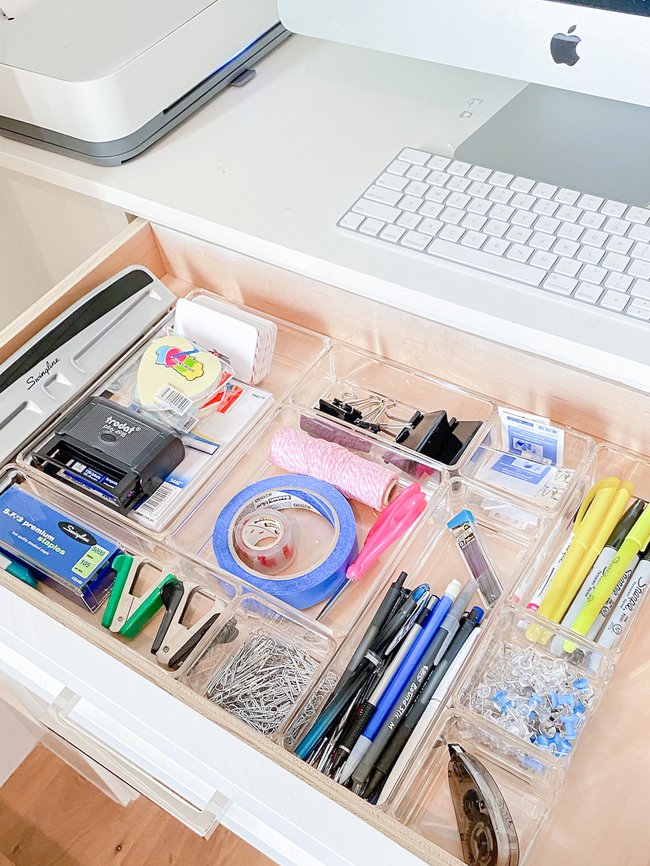
Using drawer dividers is a simple way to keep your home office desk drawers neat. They help separate items and make everything easier to find. Drawer dividers turn messy drawers into organized spaces. This method saves time and reduces stress.
Choose The Right Dividers
Select dividers that fit your drawer size perfectly. Adjustable dividers offer flexibility for different drawer shapes. Wooden or plastic dividers are sturdy and easy to clean. Make sure they are easy to install and remove.
Create Compartments For Small Items
Small items like paper clips, pens, and sticky notes need their own spaces. Use dividers to create compartments that keep these items from mixing. This prevents clutter and stops items from getting lost. Group similar items together for faster access.
Avoid Overfilling Drawers
Do not cram too many items into one drawer. Overfilling makes it hard to find things and can damage dividers. Leave some empty space to keep the drawer tidy. A well-organized drawer improves your work focus and efficiency.
Prioritize Drawer Placement
Organizing your home office desk drawers starts with smart placement. Prioritizing where items go saves time and keeps your workspace tidy. Arrange drawers by how often you use their contents. This simple step makes your daily tasks smoother. It also reduces clutter and frustration.
Keep Frequently Used Items On Top
Place items you use daily in the top drawers. Pens, notepads, and sticky notes belong here. These tools should be easy to reach without searching. Keeping them close boosts your work speed. Avoid stuffing too many things in one drawer. Limit the top drawer to essentials only. This keeps it neat and quick to access.
Store Less Used Supplies In Lower Drawers
Use lower drawers for items you rarely need. Extra paper, old files, or backup supplies fit well here. These drawers can hold bulkier items too. Storing infrequent items below frees up space at the top. It also keeps your desk looking clean. Label these drawers to find things faster. This system keeps your workspace organized and efficient.
Manage Cables And Wires
Managing cables and wires in your home office desk drawers keeps your space tidy and safe. Tangled cords can cause frustration and slow down your work. Organizing cables prevents damage and makes it easier to find what you need. Use simple methods to keep wires neat and accessible.
Wrap Loose Wires Neatly
Start by gathering each wire separately. Use twist ties, rubber bands, or Velcro strips to wrap cables. Keep loops small but not too tight. Avoid bending wires sharply to prevent damage. Neatly wrapped wires save space and stop tangling inside drawers.
Label Each Cable
Labeling cables helps you identify them quickly. Use small tags or masking tape and write the device name. Attach labels near the plug or connector. This saves time when unplugging or reconnecting devices. Clear labels reduce confusion and clutter in your drawers.
Use Cable Organizers
Cable organizers keep wires separated and secure. Use cable clips, sleeves, or boxes inside drawers. These tools prevent cables from rolling around or knotting together. Organizers also protect wires from wear and tear. Choose organizers that fit your drawer size for the best results.
Credit: www.lifeinjeneral.com
Incorporate Vertical Space
Using vertical space in your home office desk drawers maximizes storage capacity. It helps keep items visible and easy to reach. Vertical space is often ignored but holds great potential for organization. This approach reduces clutter and saves time finding essentials.
Stack Items Strategically
Stacking items vertically makes the most of drawer height. Place heavier or less used items at the bottom. Lighter and frequently used things go on top for easy access. Use flat trays or shallow boxes to create stable layers. This method keeps your drawer neat and prevents items from falling over.
Use Vertical Organizers
Vertical organizers divide your drawer into upright sections. They hold files, notebooks, and folders neatly side by side. Use small bins or dividers to keep pens, clips, and sticky notes upright. This keeps everything visible and stops small items from mixing. Vertical organizers save space and improve drawer order.
Maintain Drawer Organization
Maintaining the organization of your home office desk drawers helps keep your workspace efficient. Organized drawers reduce stress and save time. Simple habits can keep your drawers neat and clutter-free for longer periods.
Regularly Declutter Drawers
Set a schedule to check your drawers weekly or biweekly. Remove items you no longer need or use. Toss broken pens, old papers, and expired supplies. Keep only essential items that support your daily work. Decluttering prevents clutter buildup and keeps drawers easy to use.
Keep An End-of-day Tidy Routine
Take a few minutes before finishing work to tidy your drawers. Return items to their proper spots after use. Organize papers, pens, and tools quickly each day. This habit stops clutter from accumulating over time. A tidy desk drawer every evening creates a fresh start for tomorrow.

Credit: www.youtube.com
Add Personal Touches
Adding personal touches to your home office desk drawers makes your space inviting. It reflects your style and keeps you motivated. Personalizing your drawers also helps you stay organized and find things quickly. Small details can brighten your workday and boost productivity.
Use Stylish Organizers
Choose organizers that match your room’s style and color. Stylish trays, boxes, or dividers keep items neat and easy to reach. Use materials like wood, metal, or fabric for a unique look. Attractive organizers make your drawers pleasant to open and use every day.
Label Drawers Clearly
Labels make it easy to find what you need fast. Use simple words or icons on labels for quick reading. Clear labels stop clutter from building up again. You can use printed labels or write on tags by hand. Well-labeled drawers save time and reduce frustration.
Frequently Asked Questions
How To Organize Home Office Drawers?
Clear out all items, keeping only essentials. Sort supplies by function and frequency of use. Use dividers for compartments. Label cables and wrap loose wires. Leave some empty space for easy access and neatness.
How To Organize Work From A Home Desk?
Clear your desk daily and keep only essential items. Arrange supplies by function and frequency of use. Store files nearby. Use organizers and label cables. Maintain empty space to reduce clutter and improve focus.
What Are Some Common Drawer Divider Mistakes?
Common drawer divider mistakes include overfilling drawers, lacking compartments, ignoring vertical space, skipping decluttering, and using no organizers.
What Is The Konmari Method For Desk Organizing?
The KonMari method organizes desks by category, such as papers, books, and supplies. Keep only items that spark joy.
Conclusion
Organizing home office desk drawers improves daily work efficiency. Keep only essential items inside each drawer. Use dividers to separate supplies by type. Arrange drawers by how often you use items. Label sections to find things quickly. Avoid overfilling drawers to maintain neatness.
Leave some empty space to prevent clutter. Regularly clean and reorganize to stay productive. A tidy desk helps focus and reduces stress. Simple steps lead to a well-organized workspace.